How to Choose a Hotel for Solo Travel in Japan: 7 Beginner Checks
A beginner-friendly guide to choosing hotels for solo travel in Japan, covering location, price, room type, reviews, safety and booking rules.
今回の更新内容
Expanded the beginner hotel-selection guide with location, total price, room type, reviews, safety and booking checks.
Quick answer: decide location, total price and room type first
When choosing a hotel for a solo trip in Japan, it is easy to get lost in photos and reviews. Start with three decisions:
- Which station or area should you stay in?
- What is your total budget after tax and fees?
- Which room type fits the stay: single, semi-double, double, capsule or dormitory?
Once these are clear, the shortlist becomes much easier to compare. Then check reviews, facilities, safety and cancellation rules.
For solo travel, the cheapest option is not always the best option. A hotel that is far from the station, difficult to reach at night or too small for your luggage can reduce the quality of the trip.
If you want booking-site search steps first, see how to find hotels for one person in Japan.
Seven checks for beginners
1. Location: check the route back at night
Location affects both convenience and peace of mind. Do not look only at the number of minutes from the station. Check the actual route.
Useful checks include:
- walking time from the nearest station
- whether the route follows main streets or narrow alleys
- nearby convenience stores and restaurants
- late check-in availability
- easy access to your sightseeing or work destination
For a first visit to a city, a hotel within about 5 to 10 minutes of a station, preferably on a clear main route, is usually easier.
2. Price: compare the final total, not just the list price
Booking-site list prices can be misleading. Compare the final total after taxes, service charges, meal plan and cancellation conditions.
| Item | What to check |
|---|---|
| Guests | One adult and one room |
| Meals | Room only, breakfast included or dinner included |
| Taxes and fees | Whether the final screen includes everything |
| Cancellation | Free-cancellation deadline or non-refundable plan |
| Payment | Online payment or payment at the property |
If price is the priority, compare business hotels, capsule hotels, guesthouses and internet-cafe night packs. For Tokyo, see how to stay cheaply alone in Tokyo.
3. Room type: decide whether you only sleep or spend time in the room
Common solo-travel room types include:
| Room type | Good for | Main caution |
|---|---|---|
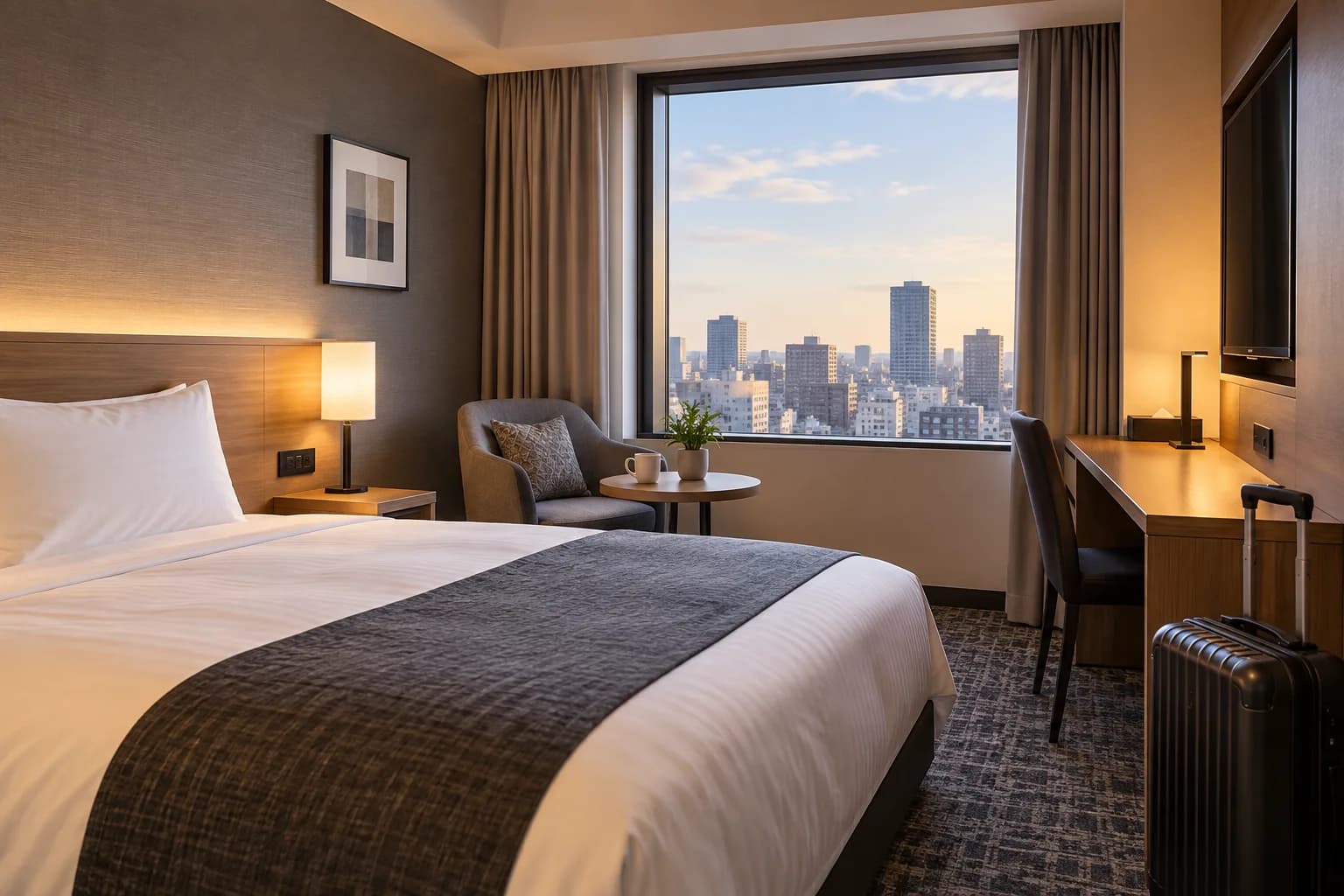
| Single | Lower price, sleep-only stay | Limited luggage space |
| Semi-double | Slightly more bed comfort | Floor area may still be small |
| Double | Better sleep comfort | Not always sold for one guest |
| Twin for one | Luggage and longer stays | Often more expensive |
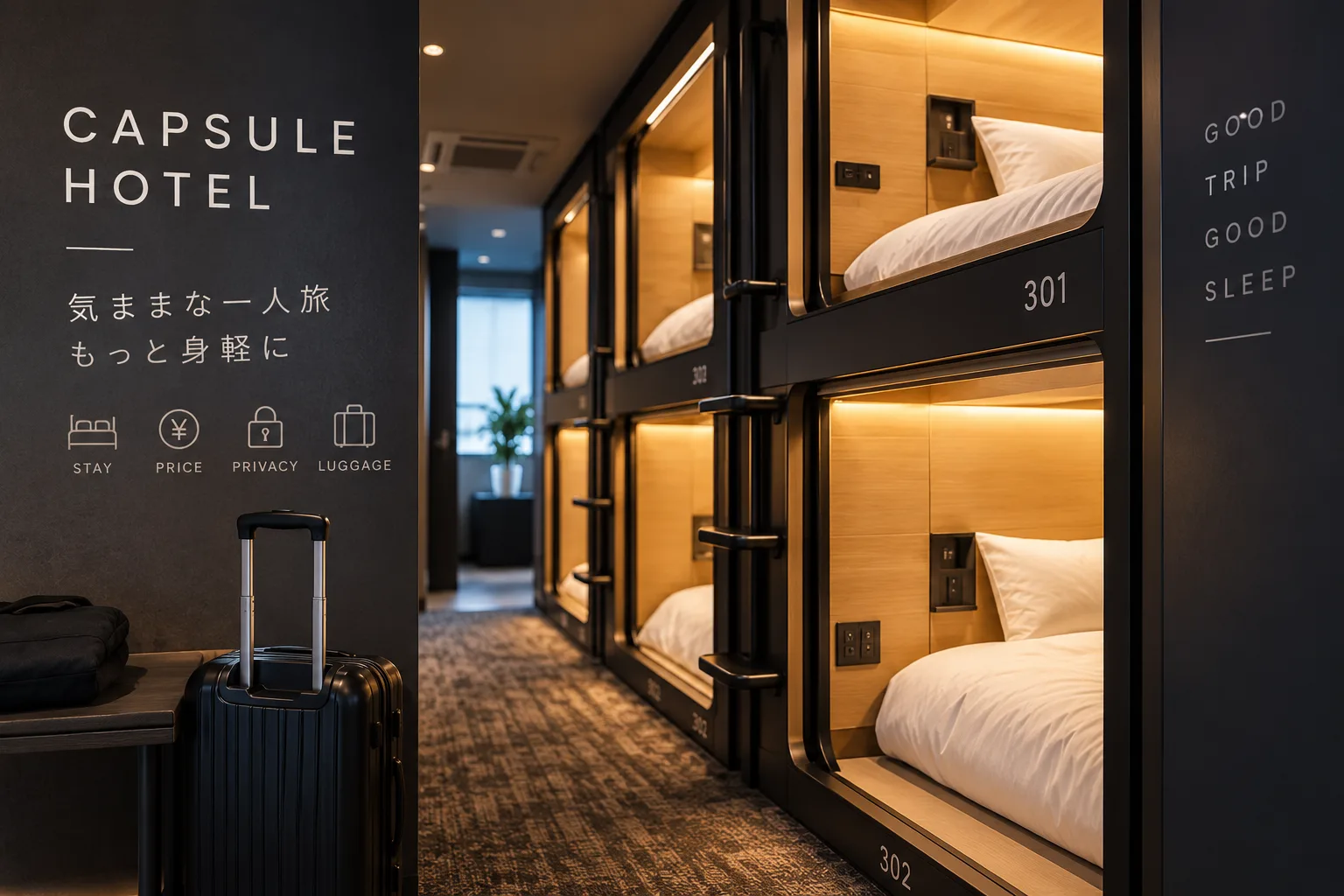
| Capsule | Price, bath, sauna | Noise and privacy |
| Dormitory | Lowest budget | Shared room |
For a broader comparison, see Japanese hotel room types for solo travelers.
If you are unsure whether one person can book a wider bed, these guides may help:
4. Facilities: match them to how long you will stay in the room
More facilities do not always mean a better choice. Prioritize what you will actually use.
For a sleep-only stay, check:
- bed width
- bathroom type
- Wi-Fi
- power outlets
- check-in time
If you will work in the room, check the desk, chair, lighting and Wi-Fi reviews. For longer stays, laundry, microwave access, a refrigerator and a public bath can matter more.
5. Reviews: read the complaints that affect you
Do not rely only on the overall score. Read low-rated reviews and decide whether the complaints matter for your trip.
For example:
- “Far from the station”: acceptable with light luggage and good weather?
- “Small room”: fine if you only sleep?
- “Thin walls”: avoid if you are sensitive to noise.
- “Old building”: acceptable if cleaning is praised?
- “Noisy area”: avoid if you need quiet sleep.
If several reviews mention the same issue that would bother you, choose another property even if the price is attractive.
6. Safety: raise the priority for solo female travel or late arrivals
Safety includes the hotel and the surrounding route.
Check:
- whether the route from the station is easy to understand
- front-desk hours
- elevator or floor-access security
- reviews mentioning the neighborhood, noise or guest atmosphere
- women-only floors or women-friendly plans
For more detail, see hotel checklist for solo female travelers.
7. Booking rules: confirm cancellation and check-in time
Before booking, check the conditions carefully.
- When does free cancellation end?
- Is the plan non-refundable?
- Do you need to contact the hotel if you arrive late?
- Can you leave luggage before check-in or after check-out?
- What are the cleaning rules for multi-night stays?
For a step-by-step list, see solo hotel booking checklist.
Which hotel fits your purpose?
Lowest possible price
Consider budget business hotels outside major stations, capsule hotels, guesthouses and night packs at internet cafes. Be careful not to sacrifice sleep or safety too much for a small price difference.
Business trip or work stay
Prioritize station access, a desk, Wi-Fi, breakfast and easy check-in. Staying near the next morning’s destination can be more valuable than saving a little money.
Sightseeing and food
Choose an area that is easy to return to at night and has restaurants nearby. A hotel near a transport hub or food district can make solo dinner easier.
Onsen or public bath
Look for hotels with a public bath, capsule hotels with spa facilities or ryokan that accept solo guests. For ryokan, see solo-friendly onsen ryokan guide.
Mistakes to avoid
- Assuming a two-person plan can be used by one guest
- Choosing a hotel only because it is cheap
- Missing smoking or non-smoking status
- Assuming cancellation is free
- Judging room size only from photos
- Ignoring low-rated reviews
- Forgetting to check late check-in rules
When unsure, choose a hotel with clear solo occupancy, understandable cancellation rules and an easy route from the station.
Related guides
- Solo hotel booking checklist
- How to find hotels for one person in Japan
- Japanese hotel room types for solo travelers
- Rural minpaku and farm stays in Japan
- Can One Person Stay in a Semi-Double Room in Japan?
- Can One Person Stay in a Double Room in Japan?
- How to stay cheaply alone in Tokyo
- Hotel checklist for solo female travelers
Frequently asked questions
What should I check first when choosing a hotel for solo travel?
Start with location, final total price and room type. Then compare reviews, facilities, safety and cancellation rules.
Is a single room the safest choice for a first solo trip?
A single room is usually practical and economical. If you want more bed comfort, consider semi-double or double rooms for one. If you have more luggage, a twin room for one may be more comfortable.
Room only or breakfast included?
Breakfast included is convenient when your morning schedule is tight or there are few restaurants nearby. Room only is more flexible if you want to explore cafes or local restaurants.
How should I read hotel reviews?
Read low-rated reviews and look for repeated complaints. Noise, cleanliness, station access, neighborhood and front-desk response are especially important for solo travelers.
What should I watch for when booking a cheap hotel?
Check the route from the station, safety at night, shared facilities, cancellation rules and whether the room is private. A cheap stay is not worthwhile if it makes the trip stressful.
What matters most for solo female travelers?
Prioritize a clear route from the station, lighting at night, front-desk support, security and recent reviews. Women-only floors or women-friendly plans can add peace of mind.
This article reflects general information as of September 23, 2026. Confirm current prices, facilities and booking rules with the hotel or booking site.