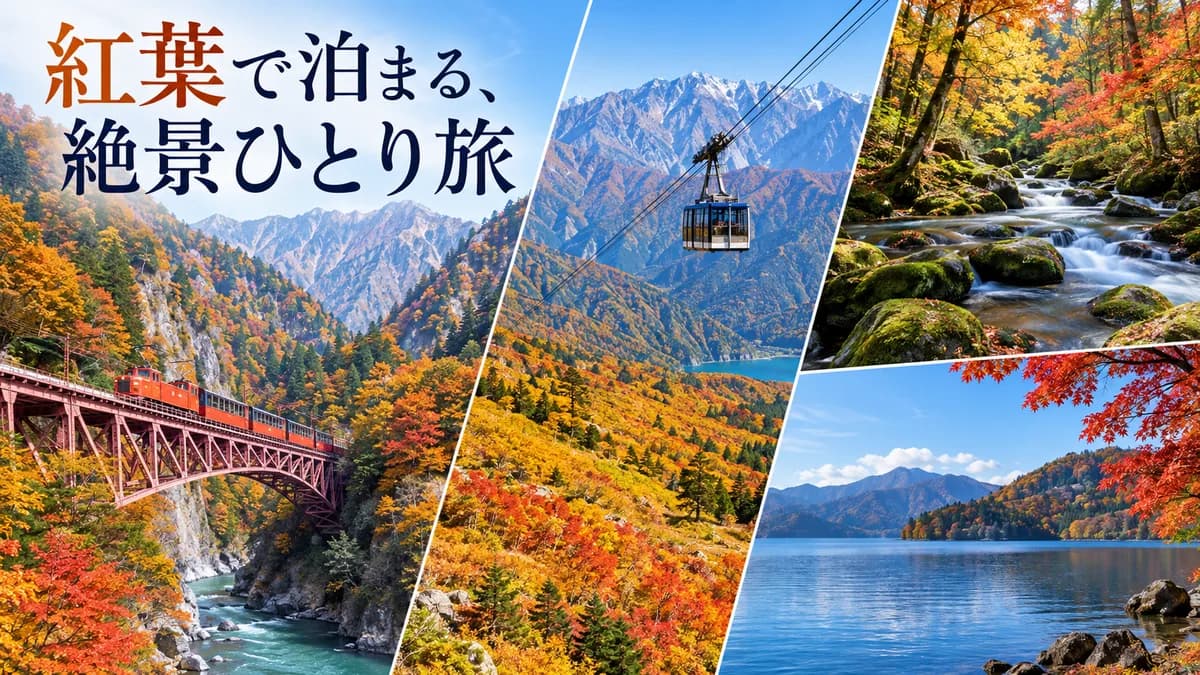
Autumn Foliage Solo Stays from Tokyo: Tateyama Kurobe, Kurobe Gorge, Oirase and Lake Towada
A solo-travel lodging guide for autumn foliage routes from Tokyo, comparing Tateyama Kurobe and Kurobe Gorge with Hakkoda, Oirase Stream and Lake Towada.
今回の更新内容
Added two autumn foliage solo routes with suggested lodging areas, Jalan search buttons, a practical packing checklist and a rainwear product card.
Quick answer
For an autumn foliage solo trip from Tokyo, the two strongest choices are:
- Tateyama Kurobe Alpine Route and Kurobe Gorge if you want dramatic mountain scenery, ropeways and trolley trains
- Hakkoda, Oirase Stream and Lake Towada if you want to walk along streams, forests and lakeside scenery
Both can be planned as a two-night, three-day trip by Shinkansen. Because autumn foliage season is busy, book lodging early and check official transport information before departure.
Plan A: Tateyama Kurobe Alpine Route and Kurobe Gorge
This plan combines the Kurobe Gorge trolley train with the high-altitude scenery of the Tateyama Kurobe Alpine Route. It suits solo travelers who enjoy scenic rides and planned transfers.
Night 1: Unazuki Onsen
Unazuki Onsen is the easiest base for Kurobe Gorge Railway. Staying here keeps the trolley-train day simple and gives you an onsen evening after the ride.
Example lodging candidates:
- Kurobe Unazuki Onsen Yamanoha: Good if you want views, baths and a classic onsen stay.
- Enraku: A more refined ryokan option for travelers who want dinner and quiet room time.
- Entaijiso: A candidate for travelers who want a traditional Unazuki Onsen atmosphere.
View Unazuki Onsen stays on Jalan

Before planning around the trolley train, check the Kurobe Gorge Railway official site for operating sections, timetables and seasonal notices.
Night 2: Omachi Onsen or Nagano Station
After crossing the Alpine Route toward Nagano, choose Omachi Onsen if you want another hot-spring night, or Nagano Station if you want easier onward travel.
Example lodging candidates:
- ANA Holiday Inn Resort Shinano-Omachi Kuroyon: Useful if you want a resort-style stay after the Alpine Route.
- Kurobe Kanko Hotel: A practical Omachi Onsen choice for bath time after a long transfer day.
- Hotel Metropolitan Nagano: A convenient station-area base for the final day.
View Omachi Onsen stays on Jalan
View Nagano Station area stays on Jalan
Autumn colors on the Tateyama Kurobe Alpine Route vary by altitude. Check the official Alpine Route website for current foliage and transport information.
Plan B: Hakkoda, Oirase Stream and Lake Towada
This plan is better for travelers who want to walk through forests and streamside scenery. It is more weather-sensitive and requires careful bus planning.
Night 1: Sukayu Onsen and the Hakkoda area
Stay around Hakkoda if you want to enjoy the mountain air and an onsen evening after the ropeway.
Example lodging candidates:
- Sukayu Onsen Ryokan: A famous hot-spring inn with a rustic atmosphere. Check bath rules, room types and solo availability.
- Hakkoda Hotel: A quieter mountain-resort option for travelers who want the lodging itself to be part of the trip.
- Jogakura Kanko Hotel: A candidate for an onsen stay near the Hakkoda area.
View Sukayu Onsen area stays on Jalan
Check the Hakkoda Ropeway official site before departure, as wind or weather can affect service.
Night 2: Oirase Stream or Lake Towada
Stay near Oirase if the stream walk is the main point of the trip, or by Lake Towada if you want a quieter lakeside night.
Example lodging candidates:
- Hoshino Resorts Oirase Keiryu Hotel: Best suited when Oirase Stream is the focus of the trip.
- Towada Hotel: A classic lakeside-style stay for travelers who want a quieter Lake Towada night.
- Hotel Towadaso: A practical option around the Yasumiya area for lake walks and sightseeing boats.
View Oirase Stream area stays on Jalan
View Lake Towada stays on Jalan
For Oirase and Lake Towada conditions, check local information such as the Lake Towada National Park Association before traveling.
Optional final-night choice: Hachinohe Station
If you want the return to Tokyo to be easier, consider staying near Hachinohe Station instead of deep in the lake area on the final night.
View Hachinohe Station area stays on Jalan
Which route should you choose?
| Preference | Better route |
|---|---|
| Scenic rides, ropeways and mountain panoramas | Tateyama Kurobe and Kurobe Gorge |
| Walking beside streams, waterfalls and forests | Hakkoda, Oirase and Lake Towada |
| Easier lodging logistics | Nagano Station or Unazuki Onsen bases |
| Quieter nature-focused stay | Sukayu, Oirase or Lake Towada |
Solo booking checklist
- Search lodging with one adult selected.
- Check dinner availability, because mountain areas may have few evening restaurants.
- Confirm last check-in time, shuttle buses and luggage handling.
- Check ropeway, trolley train, bus and sightseeing boat status before departure.
- Pack warm layers, gloves and waterproof walking shoes.
Autumn solo trip packing checklist
Autumn foliage trips often combine tourist spots with mountain roads, streamside trails, rural buses and quiet onsen towns. Pack a little more carefully than you would for an urban hotel stay.
1. Safety and wildlife
- Bear bell or bear horn
Autumn is an active season for bears before winter. Solo travelers make less noise than groups, so it is easier to surprise wildlife around bends, streams or quiet trails. Attach a bell where it moves with your backpack, and mute it on buses, trains and inside inns so it does not disturb others.
2. Money and transport
- Cash in small bills and coins
Some rural buses, older restaurants, unmanned stations and day-use hot springs may not accept IC cards or cashless payment. Carry enough ¥1,000 bills and ¥100 coins.
- Mobile battery
Map apps, bus timetables and weak reception can drain your phone quickly. A 10,000mAh battery is a practical baseline.
3. Weather, cold and walking gear
- Layered warm clothing
Mountain and northern areas can be much colder than Tokyo, especially morning and evening. A light down jacket, fleece or wind shell is useful.
- Rainwear
Weather changes quickly in mountain areas. For Oirase or trail walks, a rain jacket is safer than relying only on an umbrella.
- Comfortable walking shoes
Wet leaves, wooden paths and unpaved trails can be slippery. Choose shoes you have already worn in.
- Small flashlight or headlamp
In rural areas, it can become very dark after sunset. A small light is useful if you need to walk to a bus stop or inn after dusk.
4. Onsen and hygiene items
- Quick-dry towel
Useful for foot baths, day-use hot springs, rain or sweat.
- Basic medicine
Carry motion-sickness medicine if buses make you feel unwell, plus stomach medicine, pain relief and bandages.
- Plastic bags or zip bags
Use them for wet towels, trash and protecting electronics from rain.
5. Food and drink
Buy water and a small snack before taking a rural bus or entering a hiking route. Nuts, chocolate, yokan or energy bars are useful when shops or vending machines are closed.
Bear safety on mountain trails and stream walks
Autumn foliage routes often pass through forest, mountain and streamside areas. Around Tateyama Kurobe, Hakkoda, Oirase and Lake Towada, treat bear safety as part of the trip plan even if the route is popular with tourists.
Before walking, check local bear-sighting information at your accommodation, visitor center or local government website. Be especially careful early in the morning, around dusk, near bends in the trail, beside loud streams and in areas with poor visibility.
Solo travelers should keep these basics in mind:
- Avoid quiet mountain trails alone at dawn or dusk.
- Make your presence known with a bell, whistle, horn or voice where visibility is poor.
- Do not leave food waste or strongly scented items outside your bag.
- If you see a bear, do not approach it or try to take photos.
- Never approach a cub, as the mother may be nearby.
Bear bells and horns do not guarantee safety, but they can help you make noise and reduce the chance of surprising wildlife. If you buy one, check volume, charging method, weather resistance and how easily it attaches to your bag.
Information is based on general conditions as of September 21, 2026. Foliage, transport, traffic restrictions and lodging plans can change, so confirm the latest official information before booking.